
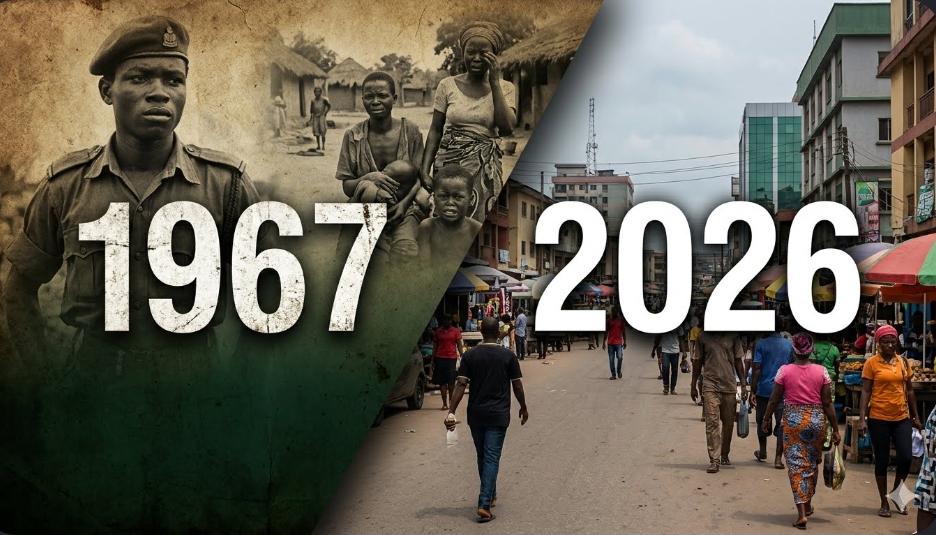
The True History of Biafra (1967 – 2026): Shocking Truths and Untold Timeline!
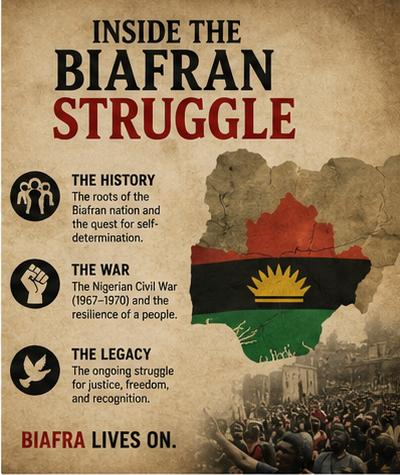
The history of Biafra and its ongoing quest for self-determination remains one of the most polarizing, deeply emotional, and historically complex narratives in modern African politics. For decades, the word “Biafra” has evoked a powerful mix of profound grief, unyielding resilience, and unresolved political tension across Nigeria and the global diaspora.
What began as a desperate bid for survival and sovereignty in the late 1960s has transformed across generations into a modern ideological movement, heavily fueled by socio-economic grievances, digital activism, and complex legal battles.
But make we yarn true, what is the genuine, unfiltered truth behind this struggle? How did a movement that lay dormant for decades morph into a powerful geopolitical force in 2026? To truly understand the present realities of the southeastern region, we must courageously peel back the layers of time and analyze the foundational history of Biafra.
From the blood-soaked trenches of the late sixties to the highly controversial detention cells of modern security agencies, this is the definitive, updated history of Biafra spanning from 1967 to 2026.
Table of Contents
The Genesis of Anger: Post-Independence Nigeria and the 1966 Coups
To fundamentally comprehend the true history of Biafra, one must look at the fragile architectural foundation of Nigeria’s independence in 1960. The forced amalgamation of diverse ethnic groups by British colonial forces created an environment of intense suspicion, tribal rivalry, and structural imbalance.
Tensions reached an absolute breaking point on January 15, 1966, when a group of young, mostly Igbo military officers led by Major Chukwuma Kaduna Nzeogwu executed a bloody coup d’état, overthrew the democratic government, and changed the history of Biafra landscape forever.
The assassination of prominent northern and western leaders—including Sir Abubakar Tafawa Balewa and Sir Ahmadu Bello—led to the coup being heavily labeled as an “Igbo conspiracy,” despite Major General Johnson Aguiyi-Ironsi stepping in to restore order.
By July 1966, a brutal counter-coup masterminded by northern officers resulted in the assassination of Aguiyi-Ironsi and ushered Lt. Col. Yakubu Gowon into ultimate power. What followed was an unprecedented wave of anti-Igbo pogroms across the North, where tens of thousands of Easterners were systematically massacred, forcing millions of refugees to flee back to their ancestral homelands in the East.
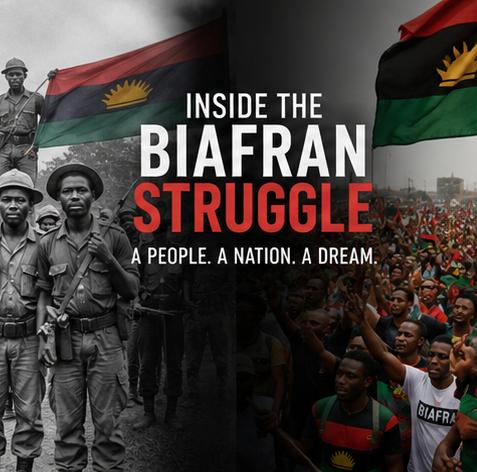
The Declaration and The Cost of War (1967–1970)
Efforts to peacefully resolve the brewing humanitarian and political catastrophe failed entirely, most notably during the famous Aburi Accord in Ghana, where agreements on a decentralized, confederal system of governance collapsed upon return to Nigeria.
Faced with an influx of displaced refugees and a federal government unwilling to guarantee the safety of his people, the military governor of the Eastern Region, Lt. Col. Chukwuemeka Odumegwu Ojukwu, took a historic stand.
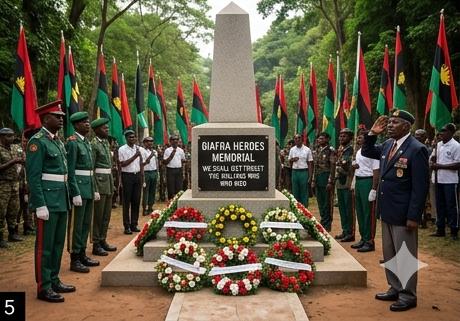
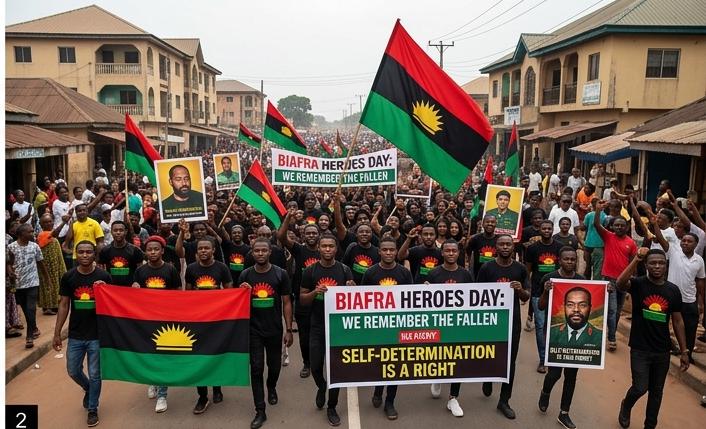
On May 30, 1967, Ojukwu officially declared the Eastern Region an independent, sovereign state known as the Republic of Biafra, adopting the rising sun as its eternal symbol of hope. This singular date has remained a defining moment of remembrance for decades in the written history of Biafra, as we explored deeply in our comprehensive review of the Biafra heroes remembrance day milestones.
The Nigerian federal government immediately rejected the declaration, labeling it an illegal secessionist act, and launched a full-scale military campaign to reclaim the region on July 6, 1967.
The war that ensued was a David-versus-Goliath struggle. Biafra, largely cut off from global arms markets, relied heavily on indigenous ingenuity, manufacturing their own landmines (known as Ogbunigwe) and refining their own petroleum in hidden bush refineries.
However, the turning point of the conflict was not fought on the battlefield, but through a brutal economic blockade implemented by the federal government. By completely shutting down Biafra’s land, air, and sea borders, food supplies vanished entirely.
Images of starving Biafran children with distended bellies due to severe Kwashiorkor flooded international media, shocking the conscience of the world. Despite heroic relief airlifts by organizations like Joint Church Aid, over two million Biafrans perished, mostly from starvation.
By January 1970, with Ojukwu flying into exile to seek asylum, Major General Philip Effiong officially signed the surrender documents, effectively bringing a formal end to the short-lived republic.
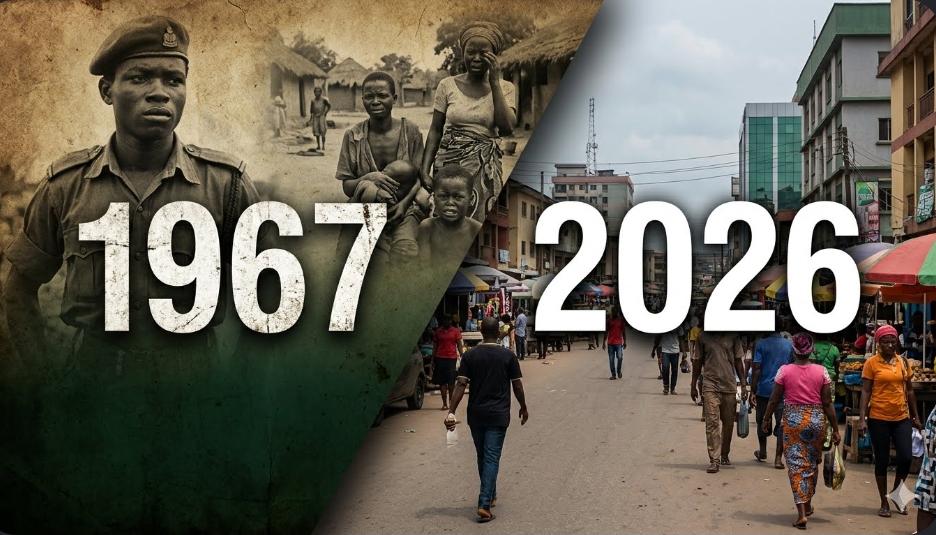
The Reconstruction Era and the Seed of Marginalization (1970–1999)
In the immediate aftermath of the war, General Yakubu Gowon famously declared a policy of “No Victor, No Vanquished” alongside his ambitious “Three Rs” agenda: Reconstruction, Rehabilitation, and Reconciliation.
But make we reason this matter clearly: did the federal government genuinely execute these promises, or did they subtly institutionalize the economic marginalization of the Igbo race? This phase became a critical, quiet chapter in the post-war history of Biafra.
Many Easterners point to controversial post-war banking policies—where every Biafran account holder was given a flat sum of only 20 pounds, regardless of how much wealth they previously held—as a deliberate move to cripple the region’s economic power.
Furthermore, successive military regimes systematically ignored the infrastructural development of the Southeast, leading to a growing, multi-generational feeling of exclusion among young Easterners who never experienced the horrors of the actual war but lived through its discriminatory leftovers.
MASSOB and the Resurgence of the New Struggle (1999–2012)
With Nigeria’s historic transition back to democratic governance in 1999, the dormant ideology found a fresh voice. An Indian-trained lawyer, Chief Ralph Uwazuruike, founded the Movement for the Actualization of the Sovereign State of Biafra (MASSOB).
Uwazuruike introduced a completely new strategy to the history of Biafra timeline: non-violent agitation, civil disobedience, and the symbolic hoisting of Biafran flags across major southeastern trade hubs.
Despite facing aggressive clampdowns, mass arrests, and treason charges from state security apparatuses, MASSOB successfully kept the conversation alive, passing the ideological torch to a highly disillusioned, tech-savvy younger generation.
The Radio Biafra Era, Nnamdi Kanu, and IPOB (2012–2021)
The entire trajectory of the self-determination movement shifted radically with the emergence of Nnamdi Kanu, a UK-based activist who originally operated under the wings of MASSOB before breaking away to form the Indigenous People of Biafra (IPOB).
Leveraging the borderless power of digital media, Kanu revived Radio Biafra, using highly charged, aggressive broadcasts to critique the structural failures of the Nigerian state, which he notoriously referred to as a “zoo.”
Kanu’s arrest in Lagos in October 2015 transformed him into an instant cult-hero and political martyr. His subsequent detention sparked massive, nationwide protests across southeastern streets, resulting in violent confrontations with law enforcement agents and adding a highly volatile chapter to the modern history of Biafra.
After being granted bail in 2017, Kanu’s ancestral home in Afaraukwu was raided by military forces during Operation Python Dance, forcing him into a dramatic exile abroad, where he continued to direct IPOB’s international operations and diplomatic lobbying efforts.
The Modern Face of the Struggle: Sit-at-Homes and Legal Battles (2021–2026)
The contemporary history of Biafra entered its most turbulent, unpredictable chapter in June 2021, when Nnamdi Kanu was dramatically intercepted in Kenya and forcefully extradited back to Abuja to face terrorism and treason charges.
In fierce retaliation to his ongoing detention, IPOB leadership introduced a mandatory “Monday Sit-at-Home” policy across all five southeastern states, completely paralyzing local businesses, schools, and transportation networks.
By 2026, this policy has turned into a double-edged sword. While it serves as a powerful display of civil compliance, it has caused devastating economic losses reaching trillions of Naira, deeply hurting the exact local populations it aims to liberate.
Compounding the regional crisis, a dangerous internal division emerged within the movement. Factions led by figures like Simon Ekpa, operating from Finland, introduced even more extreme enforcement measures, leading to a rise in insecurity, unknown gunmen activities, and violent enforcement clashes.
The gridlock surrounding his multi-year detention highlights a fascinating Nnamdi Kanu appeal jurisdiction paradox that has puzzled constitutional lawyers, even as regional leaders continuously push for institutionalized dialogue political solutions for Nnamdi Kanu to de-escalate the street tensions.
The Global Geopolitical Context of Self-Determination in 2026
As the international community monitors shifting democratic norms across the continent, the unresolved status of the southeastern region remains a highly sensitive topic on global diplomatic agendas, closely tied to the evolving history of Biafra timeline.
Political analysts argue that treating the agitation purely as a military threat without addressing the foundational issues of restructuring, devolution of power, and resource control will never yield lasting peace. Globally, these conversations rely heavily on the principles protected under the United Nations Human Rights declarations regarding minority groups.
The journey from a fully armed three-year war of survival to a complex 21st-century digital ideological movement proves that ideas within the history of Biafra cannot be easily extinguished by physical force alone.
MAKE WE YARN: Looking closely at the entire timeline from 1967 to 2026, do you honestly believe a peaceful, restructured Nigeria is still possible, or is a democratic referendum the only genuine solution to this crisis? How can the region stop the economic damage caused by sit-at-home orders? Drop your brutally honest thoughts in the comment section below make we talk am!
Stay tuned to NaijaTrends for up-to-the-minute historical reportage, breaking political updates, and expert civic analysis on national affairs.