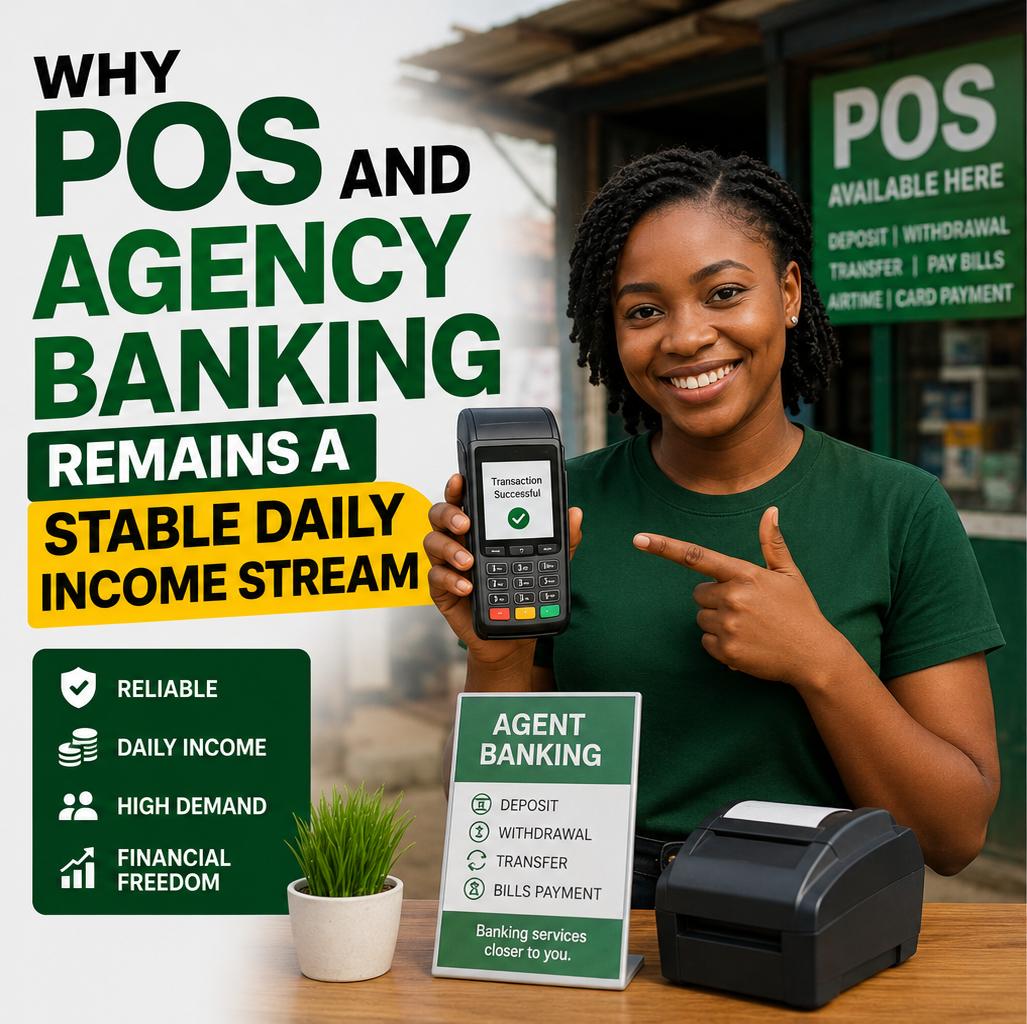
Why POS and Agency Banking Remains a Stable Daily Income Stream
To establish a stable daily income stream across modern Nigerian neighborhoods, look closely at how mobile banking agents have turned into essential community infrastructure. Point of Sale (POS) and agency banking systems allow local smart operators to process everyday physical cash transactions on behalf of mainstream commercial banking networks. Let’s be real, with the endless queues at traditional bank ATM galleries and frequent system downtimes, local retail consumers are actively searching for closer alternatives. For any sharp entrepreneur seeking a straightforward retail setup that provides reliable, liquid cash returns every single day without failing, operating a strategic agency banking kiosk remains a highly viable path to financial independence.
Abeg, make we talk true: the economy is tough, and relying on only one salary or waiting for unexpected allowances can leave anyone stranded. That is why creating a resilient, independent liquidity mechanism is no longer optional. When you set up this system properly, you aren’t just starting a random street hustle; you are launching a full-scale neighborhood financial hub. If you play your cards right, keep your machine operational, and maintain a steady pool of operational cash, this business model will consistently generate a stable daily income stream that can comfortably handle your family’s recurring bills while building your personal savings from dawn to dusk.
Table of Contents
1. The Power of Location Selection for a Stable Daily Income Stream
In the competitive agency banking landscape, your physical location determines your daily profit margins completely. If you go and set up an umbrella or wooden kiosk directly next to three competing old operators inside an already overcrowded marketplace, you will dilute your transaction volume. Suffer head no be business strategy! Instead, look for underserved residential pockets or high-density commercial zones with massive foot traffic. Excellent location spots include university hostel gates, active building sites, remote residential estates far from commercial bank layouts, and major interstate transport motor parks.
Your goal is simple: position your terminal where people need physical cash immediately but face long, exhausting, or risky walks to the nearest working commercial bank branch. Think about the average market woman or a busy artisan; they will gladly pay a reasonable premium service charge rather than spend hours commuting and queuing at an old bank terminal. By analyzing traffic flows and locating your business at critical junction zones, you lay the solid foundation required to secure a stable daily income stream that your competitors cannot easily snatch away.
Furthermore, ensure you respect local layout permissions and secure your kiosk properly with the community association or local market authorities. A sudden displacement by task forces can disrupt your operational calendar and damage your business momentum. Take your time to do your background research, check the average number of people passing by every hour, and select a spot where your visibility is absolute from all angles of the street.
2. Choosing the Right Fintech Partner and Managing Uptime
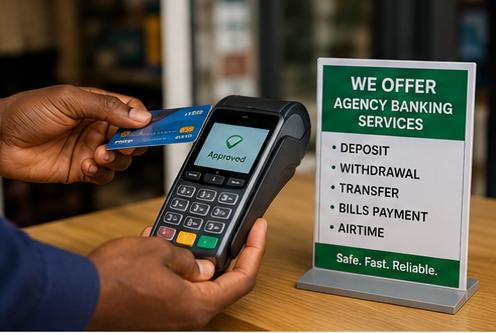
To run a truly seamless daily operation, you must secure your transaction terminal from a reputable financial technology provider. Mobile applications and terminal devices from platforms like Moniepoint, OPay, and Palmpay are highly favored by local operators due to their excellent system uptime, pocket-friendly transaction fees, and robust digital wallet architectures. When evaluating an agency banking provider, look at their network stability history first before any flashy promotional offers. A machine that constantly drops connections or hangs during peak evening hours will drive your customers away straight into the arms of waiting rivals.
Remember that when a customer wants to pull out funds for an emergency, stories like “network no dey” or “debit without alert” will destroy your hard-earned reputation instantly. Choose a financial technical partner that clears transfers and processes card withdrawals within seconds with low error rates. It is also wise to have a secondary standby terminal from a different network provider as a backup system. If network provider A decides to misbehave, you can switch over to network provider B seamlessly without losing your customer flow, keeping your stable daily income stream continuous.
You can also keep track of changing regulatory updates and compliance guidelines issued directly by the Central Bank of Nigeria to protect your operation from sudden licensing issues. Staying updated with official banking frameworks ensures your agent storefront remains legitimate, avoids unexpected card processing bans, and builds deep institutional trust among your local neighborhood user base.
3. Managing Your Working Capital Float and On-Site Security
Running an agency banking business successfully requires iron-clad cash flow discipline. You always need a baseline amount of physical cash (known as your float) to pay out local withdrawals, alongside an equivalent digital balance in your secure app wallet to process inbound fund transfers. Never make the mistake of mixing your personal household feeding expenses with your business operational float. The moment you start dipping your hands into the business cash to handle minor personal issues, your liquidity will begin to shrink, and your business capacity will drop.
Additionally, you must take physical security and risk management seriously to maintain a stable daily income stream over the long haul. Keep your terminal operational PIN codes entirely private, count every single bundle of physical notes carefully away from prying eyes, and make sure your kiosk is positioned in a secure, transparent, well-lit area. Developing a good working relationship with local security guards or neighborhood vigilantes adds an extra layer of protection for your retail storefront, keeping your assets secure from midnight intruders.
As you scale, you can utilize financial tools and balance templates from platforms like SMEDAN to structure your retail records professionally. Keeping clean financial tracking books helps you analyze your daily net profit margins, monitor your exact transaction expenses, and prepare your agency system for future expansion loans if you choose to set up more kiosks across other neighborhoods in your state.
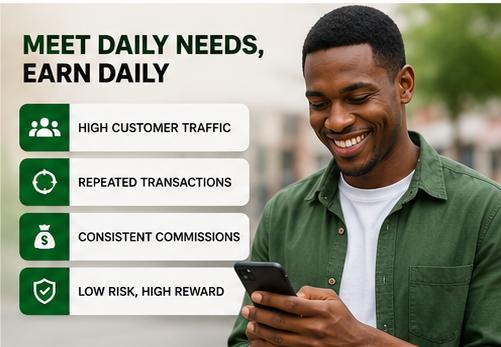
4. Building Customer Loyalty to Secure Your Stable Daily Income Stream
Since terminal service charges are relatively uniform across most streets, your standard of customer service becomes your absolute ultimate competitive advantage. Always treat your neighborhood clients with maximum respect, maintain an orderly queue during busy rush hours, and keep your service charges clearly stated on a clean, readable sign board. When people realize that your terminal doesn’t fail, that you do not overcharge them, and that you always have cash in hand, they will happily bypass closer operators just to patronize your kiosk.
Building client retention transforms random occasional passersby into loyal, long-term brand advocates who will protect your business reputation. Word-of-mouth spreads incredibly fast in close-knit communities. Once the local community associations, market leaders, and youth executives trust your integrity, they will naturally recommend your center for heavy financial activities, safeguarding your stable daily income stream from any aggressive new competitors entering the area.
If you find that your area is occasionally hit with massive cash scarcity or low traffic cycles, it is incredibly smart to look at alternative high-turnover business models. For example, check out our comprehensive blueprint on launching a lucrative mini-importation business in nigeria to learn how you can use your smartphone to source hot-selling products directly from overseas factories, creating a multi-channel investment framework that keeps profits flowing from multiple angles.
5. Maximizing Profitability Through Value-Added Services
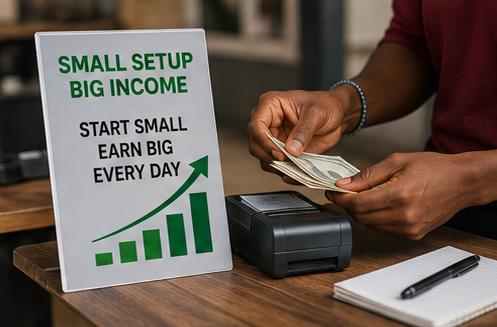
To scale your earnings beyond basic deposits and withdrawals, you should introduce value-added utilities into your daily product offering. Do not just sit down waiting for people who only want to take out cash or send money to their villages. Turn your kiosk into a fully functional utility bills payment station. You can process instant electricity token recharges, clear monthly cable TV subscriptions, and sell bulk internet data packages directly to your regular clients to widen your daily profit yields.
These micro-transactions might look small on paper, but when you multiply them by fifty to a hundred customers every single week, the accumulated service commissions turn into a massive revenue pool. This strategy diversification ensures your retail spot remains busy even on days when physical cash circulation drops across local banks, making your stable daily income stream highly resilient against external economic changes.
Make sure you also offer excellent printing options for transaction receipts. Many corporate workers and local traders require valid documentation to track their business balances properly. Providing professional services, displaying an organized attitude, and staying reliable will position your brand as the premium, go-to destination for fast financial fulfillment across your local government area.
The Ultimate Street Debate: Agency Banking vs Mini-Importation
Every business choice requires weighing upfront capital requirements against daily operational realities. Supporters of the agency banking model argue that it remains the ultimate king of liquidity because it generates a consistent, predictable, and stable daily income stream with zero warehousing costs, zero product spoilage risks, and constant consumer demand. No matter how tough things get, people must withdraw, deposit, or clear utilities daily.
On the flip side, product retail purists argue that mini-importation allows you to leverage massive profit margins by sourcing cheap factory items from China, while a POS business ties you down to a single physical spot with tight, regulated commission limits and high security risks on the street.
Over to you in the comment section: If you are given a startup grant of 250,000 Naira today, would you choose to build a stable agency banking kiosk for steady daily returns, or would you risk it all in international trade via mini-importation to chase massive profit margins? Which business can stand the current economic climate better? Drop your unvarnished experiences, drop your warnings, and let’s get the debate started below! Whose strategy wins? Let’s talk!