
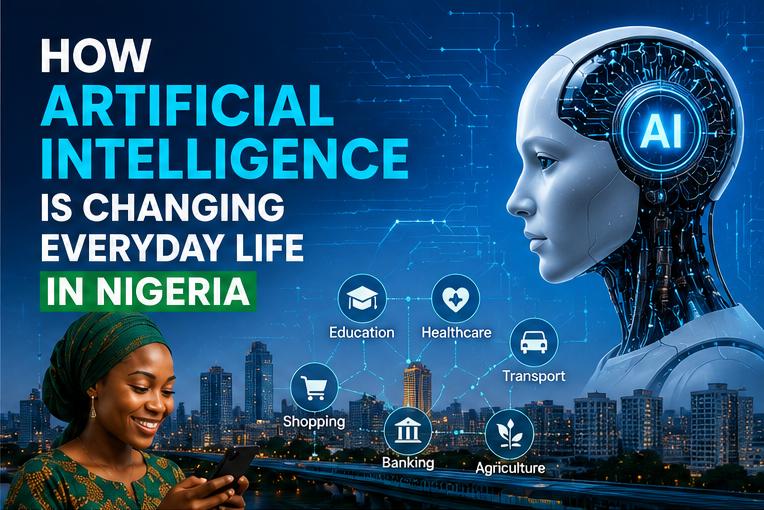
7 Ways Artificial Intelligence Is Changing Everyday Life in Nigeria

Table of Contents
Introduction
Artificial Intelligence, commonly known as Al, is gradually becoming part of everyday life around the world, including Nigeria. From smartphones and social media applications to online banking and digital assistants, Al technology is transforming the way people work, communicate, and access information.
Many Nigerians may already be using Al-powered services without fully realizing it. Applications such as voice assistants, recommendation systems on streaming platforms, facial recognition features, and automated customer support are all examples of artificial intelligence in action
One of the sectors experiencing majorchanges because of Al is education. Students can now access Al-powered learning tools that help explain difficult topics, generate practice questions, and improve learning experiences. Educational platforms are increasingly using technology to personalize lessons based on student performance.
Businesses in Nigeria are also beginning to adopt Al tools to improve efficiency and customer service. Small business owners now use chatbots to respond to customer inquiries online, while larger companies use Al systems for data analysis and marketing strategies.
The financial sector has also benefited from artificial intelligence. Banks and fintech companies now use Al systems to detect suspicious transactions, improve customer support, and analyze financial trends. This has helped improve I banking experiences for millio. of Nigerians.

Content creation and digital marketing havebecome easier because of Al-powered tools.Social media managers, bloggers, graphic designers, and video creators now use technology to generate ideas, edit content, and improve productivity.
Healthcare is another area where Al is creating positive impact. Some medical facilities now use Al-assisted systems for record management, diagnostics, and patient monitoring. Although the technology is still developing in Nigeria, experts believe it has the potential to improve healthcare delivery significantly in the future.
Despite its advantages, artificial intelligence also raises important concerns. Some people worry that increased automation could reduce job opportunities in certain industries. Others are concerned about privacy, misinformation, and ethical use oftechnology.
Experts continue to encourage responsible use of Al tools. Understanding how these technologies work can help users identify false information and use digital platforms more safely.
Young Nigerians are increasingly showing interest in technology-related careers such as software development, data science, cybersecurity, and Al engineering. As the global demand for digital skills increases, learning technology-based skills could create more opportunities for the younger generation.
Government agencies, schools, and private organizations are also investing more in technology education and innovation. Nigeria’s growing tech ecosystem continues to attract attention from investors and entrepreneurs across Africa.

Artificial intelligence is still evolving rapidly, and its influence on society is expected to increase over time. While challenges remain, Al technology also presents opportunities for innovation, education, business growth, and economic development.
For many Nigerians, understanding the benefits and limitations of artificial intelligence will become increasingly important as digital transformation continues to shape everyday life.
One area where Artificial Intelligence is expected to have a major impact in Nigeria is healthcare. AI-powered systems can help medical professionals analyze patient data, identify health risks, and improve diagnosis accuracy. Telemedicine platforms are also becoming more popular, allowing patients to consult healthcare providers remotely. These innovations could help bridge the healthcare gap in rural communities where access to medical services is limited.
Artificial Intelligence is also influencing the way businesses operate. Companies are using AI tools to automate repetitive tasks, improve customer support, and analyze market trends. Chatbots now assist customers on websites and mobile applications, providing instant responses to common questions. This not only improves customer satisfaction but also helps businesses reduce operational costs.
In the transportation sector, AI is helping to improve navigation, logistics, and ride-hailing services. Applications that provide real-time traffic updates help drivers avoid congestion and save time. Delivery companies are increasingly relying on intelligent systems to optimize routes and improve efficiency. As urban populations continue to grow, these technologies will become even more important.
Agriculture, one of Nigeria’s most important industries, is also benefiting from technological innovation. Farmers can now access weather forecasts, market information, and farming recommendations through digital platforms powered by artificial intelligence. These tools help improve productivity and enable farmers to make better decisions regarding planting, harvesting, and resource management.

Despite the numerous benefits of AI, there are still challenges that need to be addressed. Concerns about data privacy, cybersecurity, misinformation, and job displacement continue to generate discussions worldwide. As AI technologies become more powerful, governments and organizations must establish policies that encourage innovation while protecting users.
Digital literacy is becoming increasingly important in today’s technology-driven world. Understanding how artificial intelligence works can help individuals make informed decisions, use technology responsibly, and take advantage of new opportunities. Schools and educational institutions are beginning to integrate digital skills into learning programs to prepare students for the future workforce.
The rise of artificial intelligence is also creating new career opportunities. Fields such as machine learning, data analytics, robotics, cloud computing, and cybersecurity are experiencing rapid growth. Young Nigerians who invest time in learning these skills may find themselves better positioned for future employment opportunities in both local and international markets.
Nigeria’s technology ecosystem has experienced remarkable growth over the past decade. The success of fintech companies, digital startups, and innovation hubs demonstrates the country’s potential to become a major technology leader in Africa. Artificial intelligence is expected to play a significant role in this transformation by driving innovation across multiple sectors.
As AI continues to evolve, collaboration between government agencies, educational institutions, technology companies, and private organizations will be essential. Investment in infrastructure, internet access, digital education, and innovation programs can help ensure that more Nigerians benefit from technological advancement.
Artificial Intelligence is no longer a futuristic concept reserved for large technology companies. It has become part of everyday life for millions of Nigerians. Whether through mobile banking applications, online shopping platforms, navigation tools, educational resources, or digital entertainment services, AI is helping people work smarter, learn faster, and communicate more effectively.
As technology continues to advance, its impact on daily life will become even more visible. By embracing innovation while remaining aware of potential challenges, Nigerians can take full advantage of the opportunities created by artificial intelligence. The future of AI in Nigeria is promising, and its role in shaping economic growth, productivity, and digital transformation is likely to expand significantly in the years ahead.